Wednesday, March 23, 2005

How Spiders Work

Spider An orb-spinning spider puts its elegant traps together pretty quickly, proceeding easily from step to step according to the instruction manual preprogrammed into its brain. The diagram below shows the major steps.

Every web begins with a single thread, which forms the basis of the rest of the structure. To establish this bridge, the spider climbs to a suitable starting point (up a tree branch, for example) and releases a length of thread into the wind. With any luck, the free end of the thread will catch onto another branch. If the spider feels that the thread has caught onto something, it cinches up the silk and attaches the thread to the starting point.

It walks across the thread, releasing a looser thread below the first one. It attaches this thread on both ends and climbs to its center. The looser strand sags downward, forming a V shape. The spider lowers itself from this point, to form a Y-shape. This forms the core support structure of the web.

The spider easily grips the thin threads with special serrated claws, a smooth hook and a series of barbed hairs on the end of its legs. As it walks along the initial structural threads, it lays more frame threads between various anchor points. Then it starts laying out radius threads from the center of the web to the frames. The spider does not coat the frame and radius threads with sticky material, since it needs to walk across them to get around the web.

After building all the radius threads, the spider lays more non-stick silk to form an auxiliary spiral, extending from the center of the web to the outer edge of the web. The spider then spirals in on the web, laying out sticky thread and using the auxiliary spiral as a reference. The spider eats up the auxiliary spiral as it lays out the sticky spiral, resulting in a web with non-sticky radius threads, for getting around, and a sticky spiral for catching bugs.

The spider sits in the middle of its web, monitoring the radius threads for vibrations. If an insect gets caught in any part of the web, the spider will feel the motion through the radius threads and make its way to the vibration source. In this way, the web extends the spider's sensory system over a much wider area. The spider might also leave the web, to retreat to a separate nest, while monitoring the web via a connected signal line.

Web-spinning spiders have an innate ability to tell the difference between vibrations from insect prey and vibrations from other sources (a leaf falling into the web, for example). Many species can also distinguish the characteristic vibrations of dangerous insects, such as wasps, from their preferred prey.

When the orb web has deteriorated and is no longer useful, many spider species will destroy it, eating up all the threads so it can recycle the raw silk material. Spiders may leave the heavy bridge thread so that they can easily rebuild the web at a later point.

For an animated illustration of how spider works, and a more detailed write-up, please visit: How Stuff Works.

Wednesday, March 16, 2005

Work of Passion

There is a passion that man knows not
A passion only employers seem to understand
The passion they call passion for the job
That accepts all things beyond boundaries
Mediocre pay and many other duties

The dictionary defines passion
Of a very powerful feeling
That goes beyond love hate anger and emotion
The drive to reach and achieve
The unseen impossibilities
A suffering that endures inflicted pain
The state of being acted upon
In subjection to external influence
A disorder of the mind
A kind of madness
To which we choose
A state we express our passion
Of madness or of drive
Is up to employers to define

To a person who wish to join
Only the passionate will they employ
Of one who works the extra mile
With passion and love to die for
Of expressed willingness to take
Beyond ascribed duties for position engaged
The one who is unconcerned for wages paid

The passion only employers understand
Is not a passion any heart can comprehend
It is a passion underlining sufferings
That endures inflicted pain
From external influence imposed
To mean passion in subjection
In bringing disorder of the mind
To drive us crazy far beyond
The state of madness for simple minds

Sunday, March 6, 2005

Creativity With EZ-Link Card

The thing I like about using a public transport stored value card is the freedom to decide even at last minute my final destination. If I board a bus and change my mind where I wish to go, I freely choose to go some place else to disembark. I need not worry about the discrepancy I did not pay or have overpaid, because with the card, charges only deduct when I disembark. So I frequently change my mind where I wish to go in order to build flexibility to cultivate creativity.

Creativity is about observing things differently, seeing things as we have not seen before, reading details we frequently ignore. We sit on a chair daily, yet we seldom really care, to explore and see what material it is made of, whether there are any loosen screws or cushion tear, what mechanism is in it, how it turns, what type of rollers is used, because we fail to see things with a creative mind.

Creativity is also about being always ready for changes, a circumstantial or deliberate act to be different, to do things differently, and to break from routines. We can go to a regular destination by a different route on a different day, or walk a different path to where we work. We can take public transport instead of driving, or take a bus instead of the subway train.

Creativity is about listening or hearing the things that surround us, the noises and conversations people share, the sounds of nature and music everywhere. It is about smelling things in our surroundings, of fragrance and flowers, perfume and odors, food and many others. It is about being sensitive to our five senses.

In a busy world today, the things we see, smell, and hear, we seldom care more than superficial. We take for granted the things we have, and we fail to stop and listen. We do not pay attention because we are too busy, and it is for this reason I occasionally take a break, away from society, to get away from routines, to retreat, recreate, and rediscover self, to restore my soul, to make myself whole. As travelers for a little time while on earth, we need to regularly calm our souls, to enter into a mood of relaxation, to pay attention at all occasions, to close our eyes and ear all things, the likes of birds chirping, cricket and grasshopper calling, the dragonfly buzzing, the pin dropping, even the clock ticking.

Monday, February 28, 2005

Death of Spider-Man ... by Baygon


A very funny ad by Baygon, the insecticide that kills all bugs, including ... Spidey! :D

Thursday, February 24, 2005

Photos of Inspirational Nature Walk

Nature WalkAs a writer I often make time to go for nature walks to think and to get inspiration from God. I walk in early morn in solitude with nature, to calm my inner spirit and to heighten my senses in listening, smelling, touching, feeling, and seeing.

I hear the birds chirping, the insects flying, and the sounds of waves hitting shore. I feel the breeze and wind caress my face. I smell nature and the fragrance of flowers in the air. I see falling leaves and flying birds and ants marching the floor endlessly without despair. I see chameleons crossing my path and I see squirrels climbing trees.

In nature I discover myself, a human being created to love nature and co-exist with others as well. In nature, I discover my inner love for writing, a longing desire ever growing, to pen my thoughts and share to the world, how great is our God, Who created us into being.

Walk with me and share my thoughts, view the photos of my nature walk.

Monday, February 21, 2005

Quitting Gracefully: The Art of Resigning

We have all heard about writing good CVs and résumés, but we seldom hear of writing a good resignation letter. Here is a sample letter that we can use to cut and paste when tendering our resignation letter!


RESIGNATION

Dear Sirs

As required under the employment contract, I am giving you [notice period]'s notice of my resignation from the organisation starting from today and expiring on [month date, year].

Having worked for the organisation over the last few [days / weeks / months / years], I have discovered [my current job to be unsuitable for me / I am probably not the best person for the job] [because of / in view of] [reasons for resigning]

I wish to apologise for any inconvenience caused as a result of my decision and sincerely thank you for the opportunity given to me.

Yours truly
[name]


EXAMPLES:

Dear Sirs

As required under the employment contract, I am giving you one month period's notice of my resignation from the organisation starting from today and expiring on March 20, 2005.

Having worked for the organisation over the last few days, I have discovered that I am probably not the best person for the job in view of the extensive administration requirements and the lack of information to perform my assigned duties.

I wish to apologise for any inconvenience caused as a result of my decision and sincerely thank you for the opportunity given to me.


Yours sincerely
Desiree

--------------------------------------------------------------------------------

Dear Sirs

As required under the employment contract, I am giving you fourteen days 's notice of my resignation from the organisation starting from today and expiring on March 2, 2005.

Having worked for the organisation over the last few months, I have discovered my current job to be unsuitable for me because it does not meet the career plan I have in mind.

I wish to apologise for any inconvenience caused as a result of my decision and sincerely thank you for the opportunity given to me.


Yours truly
John Doe

Wednesday, February 16, 2005

Overcoming Anger

Anger
We frequently see expressions of anger and sometimes experience flare-up too. We get angry when someone breaks a promise or when we are unable to get what we want. We also get angry because we fail to meet our own expectation or because we do not measure up to perfection. We get frustrated at people when we see them do things we considered as undignified or deviant. We may even be unhappy for being angry with people and sometimes ourselves.

There are many reasons why we get angry but we must always understand that anger in itself is not wrong. What is wrong is dependent on whether we are angry for the right reasons.

The Greek philosopher Aristotle once said:

"Anyone can be angry - that is easy. But to be angry with the right person, to the right degree, at the right time, for the right purpose, and in the right way - this is not easy."

The Bible talks about an anger that is righteous and holy, such as the holy anger of God:

And they have defiled My holy name by their abominations which they have committed. So I have consumed them in My anger. (Ezekiel 43:8b NAS)

In this verse, we realize even God gets angry too and He has the right to do so because He is a holy and righteous God Who cannot let His holy name be defiled by the sins of Man. Jesus Himself was angry and cast out the people who were buying and selling in the temple (Matthew 21:12-13; Mark 11:15-17). God must also have been angry when He sends an angel to strike Herod because he did not give God the glory (Acts 12:21-23).

As we can see from the narrative above, anger in itself is NOT sin. Anger can be holy and righteous if it is for the right reasons.

Most of us however are angry not because of holiness or righteousness. We often get angry without first investigating the truth or without considerations for the circumstances of others. Regardless whether we are Christians or not, we need to learn to be "quick to hear, slow to speak and slow to anger" (James 1:19 NAS). We may get angry and yet do not sin if we are angry for the right reasons. However, whether it is for the right or wrong reasons, our anger must always be kept in checked and not consume us or be carried forward to another day so that we do not sin.

This is what the Bible says about handling anger:

Be angry, and yet do not sin; do not let the sun go down on your anger, and do not give the devil an opportunity. (Ephesians 4:25-16 NAS)

Let all bitterness and wrath and anger and clamor and slander be put away from you along with all malice. And be kind to one another, tender-hearted, forgiving each other, just as God in Christ also has forgiven you. (Ephesians 4:31-32 NAS)

So when we get angry the next time, remember not to flare-up, but stay compose. Learn to forebear, investigate the truth, and be forgiving.

This approach however is not going to be easy, especially if you are not a Christian. To the non-believers, they must work really hard at self-control, and sometimes this method doesn't work too well for a person with a temper. For Christians, this can be cultivated quite easily because it comes natural with the indwelling of the Holy Spirit whose fruit is "love, joy, peace, patience, kindness, goodness, faithfulness, gentleness, self-control; against such things there is no law." (Galatians 5:22-23 NAS).

If you desire to have the power to overcome sin and therefore anger, all you need to do is to acknowledge your sinfulness and invite Christ into your life, and He will freely give to you His Holy Spirit. Once you have received Jesus into your life, the Holy Spirit dwells in you, and you will be able with His power overcome the desire of the flesh.

In his epistle to the Galatians, Paul teaches:

... walk by the Spirit, and you will not carry out the desire of the flesh. For the flesh sets its desire against the Spirit, and the Spirit against the flesh; for these are in opposition to one another, so that you may not do the things that you please. (Galatians 5:16-17)

Let us therefore who possess the Holy Spirit in us, not get angry unduly, remembering always not to let anger be brought forward to another day. Where forgiveness is necessary, confess and reconcile with the other party within the same day, and DO NOT let anger accumulate, because it can consume us to the point of bitterness. Confess to God and acknowledge our sins if we have been angry for the wrong reasons, and let the Spirit of God Who dwells in us mold and change us as we walk in His word (The Holy Bible) daily.

Monday, February 14, 2005

It is Valentine's Day!

A day to remember the greatest love on earth,
Of Jesus Who died for us while we were still sinners,
Of One Who willingly lays down His life for another,
To save the lost world from death eternal.

Greater love has no one than this, that one lay down his life for his friends. (John 15:13 NAS)

... God demonstrates His own love toward us, in that while we were yet sinners, Christ died for us. (Romans 5:8 NAS)

For God did not send the Son into the world to judge the world; but that the world should be saved through Him. (John 3:17 NAS)

Tuesday, February 1, 2005

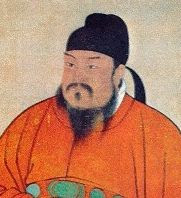
The Tang Dynasty Emperor

Tang Emperor Have you ever thought how a Chinese emperor will react when introduced to a new religion? Find out how the first Tang Dynasty emperor response to Christianity and how the infamous Empress Dowager Wu react to it.

This article details the church history of China and India. Trace how the first emperor of the Tang Dynasty embraces Christianity and how the apostle Thomas was matyred in India. Read ... Church History in Asia.

Wednesday, January 26, 2005

Not Exactly My Personality

Not exactly true ... although para 2 is quite close.

You Have A Type A- Personality

A-

You are one of the most balanced people around. Motivated and focused, you are good at getting what you want. You rule at success, but success doesn't rule you.
When it's playtime, you really know how to kick back. Whether it's hanging out with friends or doing something you love! You live life to the fullest - incorporating the best of both worlds

Do You Have a Type A Personality?

Sunday, January 23, 2005

How I came to be a Christian

I became a Christian when I was a secondary school student. As a librarian in a Catholic school, I had the opportunity to be sent to YMCA to learn some typing skills. While at YMCA, I picked up a brochure and found out about Christian correspondence courses that are available free, so I enrolled and got to know more about Christianity.

One day, while standing at the stairs of the National Library at Stamford, some students invited me to join them in their church's school club at the Bible House in Armenian Street, so I went with them. My first visit to the club was an evangelistic meeting and having known Christ through correspondence courses, I readily received Him there and then.

Becoming a Christian is not all smooth sailing. Coming from a 'buddist' family, I was persecuted and considered an outcast of the family who does not know his roots. In school, I was branded a 'holy cow' and was segregated from a circle of friends. It was not until several years later that people began to accept me for what I am, and even till this day there are still occurences of rejection from my family and relatives in situations such as a non-Christian funeral. All these 'sufferings' however are insignificant in comparison to the joy I receive when I trust Jesus to be my Lord and Saviour. Even when I stray away at times, God never for once stays away from me and when things seem humanly hopeless, He always puts in my heart a special calm that gives me confidence to go on.

Now after many years in the Christian faith, I have served the Lord in many areas, including ushering, church youth club leadership, cell group and worship leadership, counselling for several public Christian gospel conferences and other areas. I have also studied some theological studies part-time at FEBC and SBC in the past and wrote Christian teachings in church newsletters. As part of my interest in Christian research, I have also written a book on Church History many years ago for my Bible Study group.

Today, I am just a simple and ordinary Christian attending church regularly, whose heart is desiring to reach out to help others, and to share with mankind the inner peace that I've experienced in Jesus Christ.

Saturday, January 22, 2005

Inspiration vs Hard Work

We usually think more creatively when we are relaxed. Unfortunately, many of us think at the worst of times and often under pressure, when we are forced to make decisions.

As a writer, I often have to muse and think over the subject before I write, and I write best when I am relaxed. I get inspired easily when walking through the woods or while taking long nature walks. Unfortunately, such luxury are seldom available when I am on an assignment, which often has short deadline, so I do the next best thing, similar to what everyone else do when they are pressured - research and compile, then write.

Research and compilation is common in most environments, and if you know the process of problem solving, you will probably know what I mean. In a corporate environment, problem solving means identifying, analysing, implementing, and evaluating. This is not dissimilar in any other environments.

First, research and gather as much information on the subject as possible. Next, sort out the useable from the unusable then select what goes into the story. Finally write in one's own words the story based on all the information gathered, re-reading it to edit and modify where necessary.

A story written based on hard work is seldom satisfactory to the author, but at least it gets the work done. In a perfect world, the author has a lot of time to think, and if one gets a chance to write a novel or a book, some inspiration will definitely be essential. However, if writing is a daily or periodical routine that makes up a high percentage of press news and factual content then option two will be more appropriate in solving the immediate problem.

Therefore, when writing becomes a pressure instead of pleasure, it is time to retreat and rediscover inspiration within nature.

Friday, January 21, 2005

Silence

There is communication in silence where the absence of words communicates many things.

Silence reads messages in the eyes, understands the language from the body, and sees gestures that tell many tales. When someone talks to you and you remain silent, it reveals your disinterest or your ignorance. It communicates your lack of attention and a listening ear.

When someone says 'silence is golden', he or she refers to solitude, and not the absence of sound. True silence is about being quiet at heart and mind, and being of few words. It is about thinking before speaking and speaking only when necessary.

Complete silence living in the city is quite impossible, but true quietness is amidst the noises, maintaining silence in the heart and mind. If your mind is not in turmoil and your heart is calm, it is then that true peace has been attained in silence.

Quit meaningless chatter!

Saturday, January 15, 2005

My Dominant Intelligence

I am a linguist according to a test on what kind of intelligence do I have! Maybe that is why I am a journalist and writer?? :D


Your Dominant Intelligence is
Linguistic Intelligence


You are excellent with words and language. You explain yourself well. An elegant speaker, you can converse well with anyone on the fly. You are also good at remembering information and convicing someone of your point of view. A master of creative phrasing and unique words, you enjoy expanding your vocabulary. You would make a fantastic poet, journalist, writer, teacher, lawyer, politician, or translator.

What Kind of Intelligence Do You Have?

Friday, January 14, 2005

Emotional Intelligence

"Anyone can be angry - that is easy. But to be angry with the right person, to the right degree, at the right time, for the right purpose, and in the right way - this is not easy." - Aristotle.

Understanding one's emotion to behave in a way that is socially acceptable is certainly not an easy task. It requires "a type of social intelligence that involves the ability to monitor one's own and others' emotions, discriminate among them, and to use the information to guide one's thinking and action" (Salovey and Sluyter 1997, quoted in DeJanasz et al., 2001, p.9). This social intelligence is what we call today as emotional intelligence or EQ.

Emotional intelligence is about developing an awareness of one's feelings and emotions to response appropriately according to the situation at hand. It requires skills like self-control, zeal, persistence, and motivation to adapt and navigate within a society.

According to experts in the field of behavioural studies, there are six fundamentals for achieving emotional intelligence. They are: self-awareness, self-regulation, motivation, empathy, social skills, and group work skills (DeJanasz et al., 2001, p.10).

Self-awareness requires the self-analysis of behaviour in understanding the way we conduct ourselves, our motivation, our modes of thinking, acting, and interacting. It includes understanding one's own personality or the relatively stable set of characteristics, tendencies, and temperaments formed by inheritance and by social, cultural, and environmental factors (Maddi 1980, p.10; DeJanasz et. al., 2001, p.4).

Self-regulation is about regulating oneself to adapt to situations, exercising discretion, cultivating trustworthiness, conscientiousness, innovativeness, with the ability to manage disruptive emotions and impulses.

Motivation is about what drives us to pursue one action over another. By understanding one's core drivers, whether positive or negative, one can discover the roots of one's behaviour and make adjustments necessary to modify it.

Empathy is the ability to understand others and putting oneself in the shoes of another, to read and respond to others' feelings.

Social skills relate to one's ability to interact smoothly in managing interpersonal relationships and the emotions of other people.

Group work skills focus primarily on organisational or communal collaboration and cooperation, teamwork, conflict management, and the willingness to work toward common goals.

Emotional intelligence is related to several personality traits such as conscientiousness, emotional stability, opennes to experience, agreeableness and the kinds. To some extent, EQ can be learnt but people in general do not naturally develop it by just understanding what it is. It requires coaching, constant practice, and adapting from others' feedback (McShane and Travaglione 2003, pp.125-126).

For a rough gauge of how you fair in emotional intelligence, take the quiz What's Your EQ?


REFERENCES
DeJanasz, S., Dowd, K., and Schneider, B. (2001), Interpersonal Skills in Organizations, Irwin, McGraw-Hill.
Maddi, S.R. (1980), Personality Theories: A Comparative Analysis. 4th edn. Homewood, Il, Dorsey Press.
McShane, S. and Travaglione, T. (2003), Organisational Behaviour on the Pacific Rim. NSW, McGraw-Hill.
Salovey, P. and Sluyter, D. (1997), eds., Emotional Development and Emotional Intelligence: Educational Implications. New York, Basic Books.

Thursday, January 13, 2005

Element of Air

Your Element Is Air

Element of Air

You dislike conflict, and you've been able to rise above the angst of the world. And when things don't go your way, you know they'll blow over quickly. Easygoing, you tend to find joy from the simple things in life. You roll with the punches, and as a result, your life is light and cheerful. You find it easy to adapt to most situations, and you're an open person. With you, what you see is what you get... and people love that!

What's Your Element?

Wednesday, January 12, 2005

Discovering Your Personality Traits

Not long ago I wrote on the subject of Personality Traits and a few people have asked me whether there are tests that can help a person discover oneself. There are of course many methods of evaluating oneself through personality tests, but there is no one particular place or site that dare claims to provide a complete analysis of a person's personality in uncovering one's strengths and weaknesses in entirety. A good start in understanding oneself is to take a simple test such as What Number Are You?.

Using this test I discovered myself to be a peacemaker who is emotionally stable and willing to find common ground with others. My friends and family often look to me to be the mediator when there is conflict and I am generally easy going and accepting. I take things as they come and avoid conflict most of the time. I am content when things are calm.

This reading or analysis to some extent expresses my sentiments and knowing this fact helps reaffirm the understanding of myself. Understanding self however is just the first step. If a person is starting on a career, this information may help direct the right direction to bridge the gap, but if the person is mid way through a career or finishing his or her dues, this test remains an analysis for knowledge because one cannot in real life change a career to become a social worker or peacemaker to serve all mankind because of a discovery of self. To what end then is the purpose of personality tests?

In my opinion, personality tests are only for discovering self for the purpose of understanding one's own character. In understanding one's character, one can then adjust and change to adapt to the situations one face in his or her environment. Hence if you ask me about personality tests, I will say there are plenty out there on the Internet, but if you ask what you can do in discovering your personality, the answer depends on where you are at in life and in what situations you are in, and from there it is up to you to see what next steps to take.

From the way the test works, it appears the number scored doesn't really matter. It's just a reference to associate the type of personality a person majors. What matters is the description of the character. Does it describe you accurately? Accuracy of the test result is dependent on how true you are in answering the questions and how well you know yourself. If an answer is in the borderline, you'll need to pick one that is most frequently true and what's closest in describing you.

As a suggestion, you may want to consider taking the test at different days and at different time of the day because your feelings probably differ when you are busy, angry, or when sad. Results can differ depending on mood too!

Have fun discovering yourself and let me know your results! :D

Tuesday, January 11, 2005

My Personality Trait

I've just taken a personality test and found I score a 9 with description closely resembling my true self!

You Are the Peacemaker

9

You are emotionally stable and willing to find common ground with others. Your friends and family often look to you to be the mediator when there is conflict. You are easy going and accepting. You take things as they come. Avoiding conflict at all costs, you're content when things are calm.

What number are you?

On a different day in a different mood, I score 1 as a Reformer ... JANUARY 14, 2005

You Are the Reformer

1

You're a responsible person - with a clear sense of right and wrong. High standards are important to you, and you do everything to meet them. You are your own worst critic, feeling ashamed if you're not perfect. You have the highest integrity, and people expect you to be fair.


Wednesday, January 5, 2005

Want to WAP your MoBlog?

Have you ever imagine how your Moblog would look like if it supports animated GIFs, multimedia, and WAP? Well, if you like to see a sample, visit my new moblog at Want to WAP (12wap). You'll see animated Spidey dancing at this multimedia moblog at:

http://spidey.12wap.net

Don't worry ... this does not mean I won't be blogging here anymore. There are just too many things I like to ever leave this place ... the friends I've made, the group blogs I'm managing, and the features of moblog.com.sg (e.g. topics categorisation) that I don't not get to seen at other blogs. Simply put, I like this place too much to stop blogging here! :D
Before you starting asking me what are the differences between moblogging here and there, just read my article, '12wap' and you will understand.

Sunday, January 2, 2005

Prejudices

If a mobile phone rings during a seminar attended despite a prior request by the organisers to turn off all phones, which group of people will immediately come to mind to blame? Is it the youngsters or the adults?

The scenario described above is fairly common and often happened in public meetings. The fact that we almost always blame the younger attendees for the nuisance phone interruption illustrates the prejudices all of us possess to some degree or to a great degree. We always think negatively of people of a certain group based on race, age, occupation, financial status, or the kinds. For example, when we look at people of a particular race, we often feel certain the types of behaviour to expect. We assume a certain group of people frequently spit on the floor and we constantly view negatively of another group of people who constantly block passageways. Which group of people do we assume are not educated?

Preconceived ideas of people within a certain group although can be generally true at times, are in reality not the entire truth. Not all people of a certain group or genre behave in the way we think they usually behave. People are not robots. They are not programmed to behave in specific ways. Some may have accumulated bad habits as a result of the society or culture they live in, but not all are the same because individuals change and vary in behaviour. No two persons are created the same.

The next time we meet a person, try not to jump to conclusion or think negatively of that particular person. Always ask the question, are the assumptions we have of them prejudices or are they true. If the answer is prejudice, then erase it out from the mind, and view the person as someone yet to be discovered. If the answer is true, then consider whether he or she may have changed. Learn to give others second chances. Never ever coin a person by the group he or she is in or by the people he or she associates.

Saturday, January 1, 2005

Personality Traits

Personality traits in people are primarily made up of four types of temperaments: sanguine, choleric, melancholy, and phlegmatic. Generally most people fall into one or two main types of temperament, however, there are exceptions where a person may possess hybrid personalities.

Understanding personality traits helps a person understand his or her character, and the character of others. Character concerns our true selves, while "personality is the outward expression of ourselves which may or may not be the same as our character" (LaHaye 1983:6) depending on how genuine we portray ourselves to others. Personality often is just a pleasing facade for an unpleasant or weak character. By learning about our temperaments, we can adjust and change for the better and it is to this end that this article is being written to help readers understand themselves in making changes and planning a course of action for the right career.

Sanguine is what we usually termed as a person with an outgoing personality who likes to mix with everybody. Sanguine often speaks before thinking and is hearty by nature. Extrovert, spontaneous, and often naïve, sanguine tends not to see the big picture of things but lives for the current. Sanguine is good at telling stories and is blessed with the gift of the gap. Weaknesses of sanguine include restlessness, weak-willed, egotistic, and emotional instability. Sanguine make good salespersons, actors, and public speakers.

Choleric is one who commands or likes to command. Often with hot temperament, choleric is strong-willed, self-sufficient, decisive, opinionated, and makes decisions for oneself and for others. Choleric thrives on activities and is not frightened by adversities. Quick to recognise opportunities and diagnosing solutions to problems, choleric possesses a well-organised mind which make them good managers and supervisors, although they may not be the best persons to understand how their staff work to achieve their goals. Weaknesses of choleric include insensitivity to subordinates, domineering, bossy, manipulative, and failure to see areas of potential pitfalls.

Melancholy is analytical, self-sacrificing, gifted, perfectionist, with sensitive emotional nature. Melancholy is prone to be introvert and often gives in to a variety of moods. Mood swings can either lift the melancholy to heights or at times to gloom and depression. When in good mood, the melancholy can become more extrovert in behaviour, but when in gloom withdraws oneself and become antagonistic. Melancholy person is a very faithful friend, but does not make friends easily. Melancholy person is dependable and expects very high standards on self and sometimes of others. Experiences of disappointments however tend to make the melancholy reluctant to see people at face value. Melancholy person possesses analytical mind, evaluates, plans and sees far into the future in understanding possible problems and pitfalls that may be encountered. Weaknesses of melancholy include self-centeredness, pessimism, moodiness and revengeful nature. Life vocation chosen by the melancholy tends to involve great personal sacrifice which makes good support staff and the types.

Phlegmatic is described by Hippocrates as one that possesses "calm, cool, slow, easy-going, well-balanced temperament" (cited in LaHaye 1983:21). Circumstances cannot ruffle the phlegmatic who can withhold a high boiling point, seldom exploding in anger or laughter. Emotions of phlegmatic are kept in control. Kind hearted and sympathetic, the phlegmatic seldom conveys his true feelings. Phlegmatic tends to be a spectator in life and tries not to get too involved with the activities of others. When put in a position for action, phlegmatic proves to be capable and efficient person. Weaknesses of phlegmatic include slowness, laziness, stubbornness, indecision, and teasing. Phlegmatic makes good diplomat, accountant, teacher, leader, scientist, or other meticulous-type of work.

Now that you understand the four temperaments of the different personality traits, evaluate yourself and discuss at this blog what you think is your type of personality. Plan out actions that can help minimise weaknesses.


REFERENCE
LaHaye, Tim (1983), Spirit-Controlled Temperament, Asian Edition. Hong Kong: Tien Dao Publishing House

Thursday, December 30, 2004

Spider Web

Have you ever walk through a spider web accidentally because you are unable to see or are not aware of its presence? If you have not, you should try it someday. It is quite an experience, and the feeling of it is really 'great', especially when it is at your face.

Removing the web from your face or body does not exactly come easy, and sometimes if you are not aware, the spider may still be hanging to its line of web silk and eventually reside in your clothes somewhere.

Apart from cobwebs, spiders are actually quite loveable. Most spiders are not harmful creatures. In fact, house spiders can be helpful in getting rid of unwanted insects. In ancient times, the Greeks use cobwebs to apply to wounds, which is an effective way to stop excessive bleeding. Research by 19th-century doctors confirmed that spiders coat their silk with antiseptic agents. It was spider webs that French scientist Rene Reaumur came up with the idea of making paper from wood. In the 19th century, astronomers used spider silk as cross-hairs on their telescopes and in World War II, gunsights and bombsights, range finders and transits, telescopes and microscopes were all using spider silk.

Today, scientists are looking at the amazing structural properties of spider webs to be used in airplanes and bridges, clothing, body armor, and cable.


REFERENCES:
Berenbaum, M., "Spin Control". The Sciences, Vol. 35, No. 5, September/October 1995, pp. 13-15.
Lienhard, J., "Epidsode 1069: A Spider's Web", The Engines of Our Ingenuity. Houston: University of Houston, 2004.
Preston-Mafham, R., and Preston-Mafham, K., Spiders of the World. New York: Facts On File Publications, 1984.

Wednesday, December 29, 2004

Problem with Corporate Management

Many of us working in organisations often wonder why the management seems to always make lives difficult for their staff.

We constantly see organisational and departmental restructuring which affects the way we work. We see corporate reengineering exercise where people get axed. We see and hear things that threaten our livelihood and we feel our supervisors are always picking on us. We suspect and know there are spies for management who are our peers, always lurking around our backs, ready to stab on us at every opportunity.

One of the many ways our management keeps an eye on us is through spies tapping on the grapevines. Grapevines are informal gatherings by colleagues to discuss anything in general, and in general, workers talk about their bosses, their unhappiness at work and the likes. A manager can either directly plant a spy in grapevines or indirectly insinuate to get his or her staff, especially secretaries, to convey messages. For example, the manager can unofficially leak news about possible retrenchment to secretaries who unknowingly hint about it at these informal gatherings, thus motivating staff to work harder, or make them demoralised and then play saviour to win support from staff.

Such are the politics working in a corporate world and these by no means are totally the fault of management. The truth is, managers are trained by education to do such things. Attend any business management study and you will find all these written in the textbooks.

Another technique frequently used by management is the reinforcement theory, which takes the view that workers are by nature lazy and must be scrutinized or manipulated constantly in order to yield results expected by management. In short, it means behaviour modification. The management may introduce a consequence or change the environment in order to increase or maintain frequency of staff participation. These may include punishment, controlled rewards, psychological segregation, or other methods. For examples, the threat or rumours of possible retrenchments, punishment of a staff to set an example, and the cutting of bonuses. By using such shock or depravity tactics, staff will then modify their behaviours and change attitudes toward work.

Some of us who are reading this article may be supervisors, managers, or bosses in our own companies. As people in a position to determine the behaviours of others, we must constantly be reminded that not all techniques we learnt from books or education are in real life practical. We ought to treat staff as human beings and hence we must use our own brains to decide what is best and not rely on learnt knowledge. Instead of manipulating, we may wish to consider how to increase staff's job satisfaction so that they may willingly sacrifice their time and efforts to go an extra mile.

To workers who are suffering at the hands of the management, know that all these exploitations are not necessary intentional on the part of the supervisors or managers. All these techniques used by them are not new and have been taught in academic schools. It is a flaw of the education system that makes them what they are. If we can make them see their wrongs and 'educate' them through staff consensus and feedback, or even through unions, let us try to make it work. However, if such methods don't work, then use the techniques they use on us to reverse the role, and hopefully in this way get attention from them by getting our message across.

Tuesday, December 28, 2004

Learning to be Graceful

Few days ago, I wrote on the topic of 'What Is Different About Singaporeans?'. In the story, I mentioned about the unpleasant encounters which resulted from certain unacceptable behaviours.

In this article, I will list down 10 things you can do to minimise negative opinions and improve your gracefulness.

The first thing to do is to consider others first. For example, by letting others out from the MRT train before pushing your way through, by not standing near escalators to chatter and endangering the safety of others, and by considering others' health before smoking at public places such as the bus-stop.

Second, in every action, ask yourself whether it will hurt others or put others in a disadvantaged position? For example, at a pedestrian walkway, consider whether riding your bicycle will cause inconvenience to others. What about leaning on the pole in the MRT train, will others who need to stand fast on their feet be derived from getting a hold of the pole? Consider whether your shopping trolley will prevent other shoppers or block others from having access to through routes if put in the middle of a lane.

Third, in making plans, consider how you can help others. Example, if building a public place or facility, have you given thought to conveniences for the handicap?

Fourth, quit all non-etiquette behaviour, such as spitting and blowing your nose in the public, asking for more free gifts when given only one or a few, excessively accumulating free gifts not meant for you, or accumulating massive food on the plate during buffet meals.

Fifth, learn good practices from others and from other cultures. Examples include clearing your own waste after eating at fast food outlets, returning unused chillie and ketchup packs to the counters, and giving up seats to people needing it more than you.

Sixth, Learn to give more than to receive.

Seventh, do not do anything from selfishness or conceit, always thinking to exercise own rights or assuming you deserve more than others.

Eighth, do not be too calculative or expect reciprocal returns from others.

Ninth, do not expect a 100% quality in everything, be it services or products. There is NO perfection on earth.

Tenth, be considerate in all things because you want to, not because you have to or because you are told to. Do it from the heart.

Sunday, December 26, 2004

Sights and Fun in Korea

The best times to visit South Korea are during winter and autumn.

In winter, visitors can get a spectacular view of the place where 'Winter Sonata' was filmed. Go about skiing and enjoy the snow in the backdrop of beautiful and scenic surroundings. In autumn, the place boasts of fabulous sights that make up the many colours of trees and nature in their natural beauty.

Visit Mount Sorak to catch a view of the breathtaking scenery. Located in the east coast of Korea, Mount Sorak is about five hours drive from Seoul. Nature lovers, hiking enthusiasts, photographers will find Mount Sorak a perfect place for their purpose and for relaxation.

For indoor fun, Lotte World is one theme park that should not be missed. If outdoor is preferred, the Everland theme park is a good choice for family fun. Whether you are a kid accompanied by adults, or whether you are honeymooners, or couples, or with a group of friends, these are places that will keep you occupied for hours with enjoyment.

After the fun-filled enjoyment and visits to scenic places of South Korea, one of the next activities that most travelers do is to buy souvenirs. To purchase gifts that are reasonably priced, visit Namdaemon Market for a good bargain.

Rising Sun of Japan

A good time to visit Japan is during spring, when the blossoms are in full bloom. Spring time is when Japan's tourism is at its highest and many places are crowded with people and visitors all over the world to view the blossoms.

Depending on the weather, one of the 'must see' of Japan in Tokyo is Mount Fuji. The other is the Tokyo Tower, where a panoramic view is captured at its observatory deck. While at Japan, do not forget to visit Yokohama, Shinjuku, and other places that boast of spectacular shopping and food paradise. Getting to these places are really easy with the public transport, and especially via subway trains. For those who wish to experience the nightlife of Tokyo, visit Akasaka Roppongi where most clubs and restaurants are opened 24 hours.

A good place to buy souvenirs for colleagues and friends is at Asakusa. This is where items sold are less expensive than those purchased from the city.

A trip to Tokyo is never complete without visiting the Imperial Palace Garden. Take a walk through the garden and catch a glimpse of the many beautiful trees, plants, and flowers of Japan.

Friday, December 24, 2004

Wondering How I Look?

I discovered recently during the SingTel Roadshow that some mobloggers have been wondering how I look like in person. Those who have met me, there are no surprises for you, but for those who have not, here is how I look, the person in the photo taken at Tasmania.


Not much to see except for the scenery you may say, but that is as much as you will get from me, because I am not at all handsome or good looking. Why else do you think I wear a mask? How else can I be the greatest fan of Spider-Man? Like Spider-Man, I wear a mask to hide my identity.

The person who is first to meet me face to face in the moblog.com.sg world is HostSara when I was covering a story on blogging in August this year. The others who have met me more recently are ice3, Lagoon, lenenattie, Melt, Mason, yesac121, among others. So, if you must know how I am in real person, feel free to ask them. :D

Enjoy yourself moblogging everyone!

Tuesday, December 21, 2004

Service Without Smiles

The first time I went to USA was when my company sent me to a software application manufacturer in San Diego to learn how to service helpdesk in a call centre. What I have learnt from there impressed me as I compare it with the service we provide in Singapore.

In the United States, when the helpdesk support staff picks up a call from a customer, he takes his time to service the customer, providing excellent quality and above all, without rushing or with impatience. When a customer requires an answer to something the support staff is unable to provide immediately, the customer patiently waits 'on hold' for the staff to research and stays on line till the staff gives him a reply. There were no sign of any impatient gesture between the customer and the support staff, and even though the line may be toll free, it is still something we can learn about cultural differences and expectations.

Over here in Singapore, support staff are expected to rush and support as many customers as possible. Before the answers are provided, we either asked the customers to call back again or tell them we will call them back, taking extensively long time to 'research' before an attempt is made to return a call. Customers are expected to pay via 1-900 line and as the cost gets clocked at each tick, so is the growing impatience of the customer. Alternatively, we provide an answering service that is always busy or difficult to get a real person to talk to. Temperament flares up between customers and support staff frequently and eventually neither the customers nor the support staff accomplishes anything.

This is the kind of support service we get in Singapore, and this is the kind of expectations we get from customers. Tell me I am wrong or prove to me otherwise, and I will readily write another article to demonstrate the 'perfect' service a company provides because this is one area I will be glad to see improved.

Monday, December 20, 2004

What Is Different About Singaporeans?

When I was in Las Vegas several years ago, I went to a casino and applied for a Player's Card to accumulate points, not so much to gamble but to have the card as a souvenir. When I was submitting my application at the counter, the attendant on realising I am from Singapore exclaimed, "Oh no! Not another Singaporean." I was immediately appalled and questioned her what is the problem, but she did not give me a reply, except to apologise.

This occurrence sets me thinking. What is it about Singaporean that turns people off? Is there a problem with our behaviour that shocks others? Is it our kiasu-ism? Or is it because we are always too particular about things that when we ask for something we always expect the best and no less? Is it because we cannot accept anything other than perfection or is it because we lack the spirit of give and take? Is it our lack of gracefulness?

These thoughts that go through my mind remind me of another incident. I was helping a foreign company set up an exhibition in Singapore and while I was mending the booth together with these foreigners, I observed some of the greatest embarrassments I have ever seen as a Singaporean. The booth for the exhibit was intended for selling some software products, but as a form of goodwill, my foreign partners also give away button badges as freebies to attract visitors. A Singaporean carrying a child came by and was given a button badge. Instead of appreciating the gift, the man upon confirming that the button badge is free, grabs all the remainder badges in the container and intends to walk away with them, if not for my foreign partner stopping him from doing so, explaining that they are for giveaways to other visitors too. This incident puts me in a disgraced position as a Singaporean and I had to apologise to my foreign partners for the occurrence.

Although not all Singaporeans behave in the same way as described above, very often we are seen by our foreign counterparts as people of very low dignity and sometimes as deviants, non-etiquette, and nuisance. I don't wish to be ashamed to be called a Singaporean, and I certainly don't wish others to have the impression of us as nuisance. It is for that reason I often stay away from our own people who behave in such mannerism, and when I travel overseas, I always avoid travelling in a big group of Singaporeans. It is not about being ashamed of one's own country, but it is the association of characters like these that spoil our nation's image that concerns me as a citizen.

So, to all Singaporeans who are reading this, I pray that we will all learn more from the cultures overseas that may help us to be more graceful. Let us learn the good things from them and teach others to make our nation a better country, filled with citizens who are considerate, willing to give and take, who detest ungraceful acts and appropriate what is good, wholesome, and culturally refine.

To foreigners who are reading this, our suggestion is not to generalise all Singaporeans as a type of people with particular behaviours. Not all of us are the same and many of us are totally unlike what has been described. Some may have similar traits and many are still learning to be more graceful by the day. Occasionally our ways may not seem rational to you, but it is often societal pressures that make us the way we are and by no means are the fault of our own. So please just view us as individuals, each with a difference, and do not categorise us as a single genre!

Sunday, December 19, 2004

Living With Junk

We are always faced with junk everyday, handbills at our doorsteps, junk in our snail and electronic mail boxes, and junk in our bins.

In my blacklist for junk producers, ERA property agents top the list of paper junk. Before mail boxes were modified to refrain from targets of junk, I used to receive an average of fifteen to twenty handbills from ERA per week. These days I still receive junk papers from ERA at my doorsteps, and they serve as reminders not to use them when I need to sell my house. That is the kind of reaction consumers will get as a result of persistent junk marketing. I sometimes wonder whether anyone tells companies like them how many trees they are killing each day to use this form of marketing which is not only ineffective, but also a waste of everybody's time. Is it therefore justifiable for a handful of responses to result in the immense volume of junk being created?

Another kind of junk is the marketing e-mails we receive in our electronic mail boxes. The creators of such junk are the e-Marketers who often use net crawlers to obtain every e-mail addresses available on the Internet in order to send materials of their products or services using spiral marketing that persistent send junk to our e-mail accounts. Attempts to filter all e-mail junk through conditional settings in e-mail systems cannot completely eliminate or place junk into the trash automatically, hence it is quite fruitless to spend too much money on such filtering software applications.

Till this day, there is still no perfect method of eliminating junk in e-mail systems, and despite that, iDA has proposed in their legislation for an opt-out regime in electronic marketing. This means in essence that marketers can now send junk e-mails to anyone in Singapore legally or put anyone's e-mail address in their permanent mailing list for regular spamming, so long as the individual do not opt out from such marketing materials. This idea of opting out or unsubscribe from a mailing list is however impractical, because getting in is easy, but getting out is not. In fact, by sending an unsubscribe request, devious marketers can use the information as a confirmation of e-mail address validity and hence result in more marketing targets.

For more information on the proposed legislation on e-mail marketing and spamming, please read my article to The Straits Times forum page, "Opt out of proposed law."

Saturday, December 18, 2004

My Cool Spidey Album


For more images of characters in Spider-Man comics, including animated pictures, please visit my Spider-Man Album.

Disobedience vs Perseverance

Many of us who are in our youth or teenage years do not like the idea of our parents deciding for our future. Whether it be telling us what to study or what not to, we will always prefer to make our own decisions. Sometimes, we may want to run our lives our own way, and sometimes we prefer to do what our parents did in the past, to justify our actions that if our parents can do it, why can't we.

To follow our parents' footsteps, however, may not always be the correct steps, and because our parents know their past better than we do, they sometimes advise us not to follow their footsteps because they know things we don't. Maybe it is because things have changed with time, or maybe because they find it too dangerous for us, or they have discovered a mistake in their path, it all boils down to the same objective they want for us - to have a brighter future.

Unfortunately, in our youth, we do not always understand our parents' intent, so we sometimes rebel. We do things behind our parents' backs so as to get back at them or so as to make decisions of our own. Superheroes like Spider-Girl did that too. She secretly gets training from Uncle Phil and disappears to play her own 'games', but no matter how she goes against the will of her father, she always looked to the day that he will accept her for what she is.

As a girl in her teenage years, Spider-Girl discovers she possesses capabilities beyond a normal human because she inherited the strength of her father, Spider-Man. Unfortunately, her father who has given up super heroism after losing a leg during his Spider-Man days, cannot quite accept the idea of his daughter following his footsteps. When Spider-Girl begins to 'disappear' to do her superhero stunts and secretly gets training under the guidance of Uncle Phil, Spider-Man eventually gives in and teaches his daughter personally.

It is through patience and perseverance, not disobedience, that Spider-Girl was able to finally convince her father she is doing the right thing. When Spider-Man finally relents, he not only consents to her decision, but also helps her along the journey in carving out her future.

Following the footsteps of Spider-Girl, I think the correct approach to our parents' advice should be to listen, and accept their concerns. However, if we know we have made a right choice, we must persevere to convince them our directions instead of demonstrating our disobedience by disappearing, ignoring, avoiding, or doing what we think is best for ourselves without consulting them. If we can get our parents support, it is always better to do so, because we can then go a long way in doing what we want to do.

So for all of us, we must stand strong, persevere, and do not faint when our parents discipline us. We know it is for our good that they sometimes make decisions on our behalf. Even though these decisions are not always the best, we can use them if we are unclear of our directions. If we discover our own interests and can produce materials that prove our interests will help us pull through our lifelihood for the future, then, make it known to our parents, and let them decide what is best for us.

Thursday, December 16, 2004

LinkWithin

Related Posts Plugin for WordPress, Blogger...